Laptop Motherboard Components List: A Comprehensive Guide (Updated 04/01/2026)
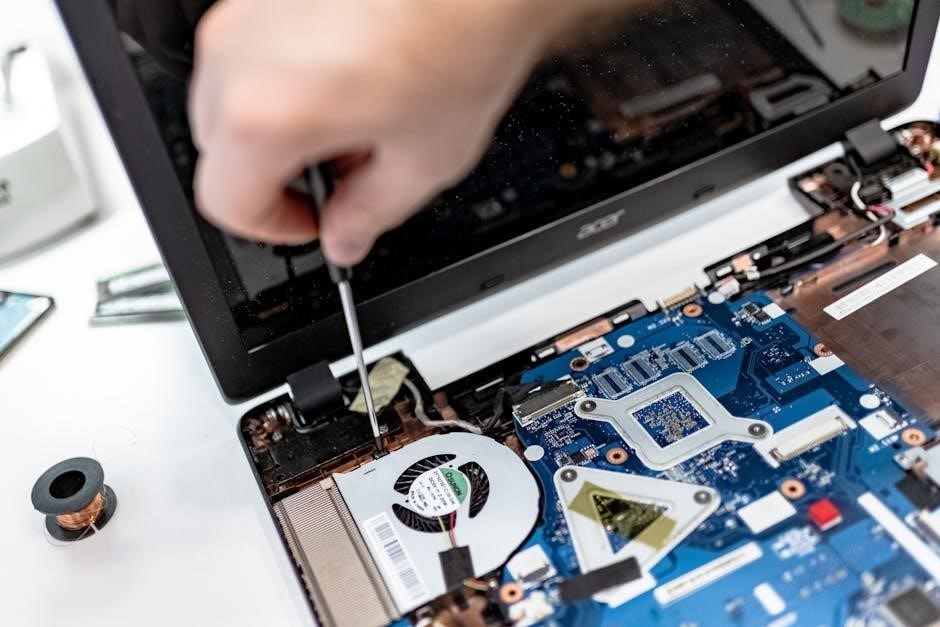
Essential for all electronics, motherboards vary in size; a laptop’s is complex, integrating numerous components for functionality and portability․
Laptop motherboards represent a fascinating intersection of miniaturization and complex engineering․ Unlike their desktop counterparts, laptop motherboards are designed with a focus on compactness and power efficiency, crucial for portable computing․ They serve as the central nervous system, connecting all vital components – CPU, RAM, storage, and peripherals – enabling seamless communication and operation․
The motherboard’s size varies significantly depending on the laptop’s form factor (ultrabook, gaming laptop, etc․)․ However, the fundamental role remains consistent: to provide a stable platform for all components to interact․ Understanding the intricacies of a laptop motherboard is key to troubleshooting, upgrading, or even repairing these sophisticated devices․ It’s a core element, present even in seemingly simple electronics like toothbrushes, scaled to meet specific needs․
II; Core Chipset Components
The chipset is the foundational logic circuitry on a laptop motherboard, orchestrating communication between the CPU and other peripherals․ Historically, this function was divided between the Northbridge and Southbridge chips․ The Northbridge handled high-speed communication – memory and graphics – while the Southbridge managed slower peripherals like USB and audio․
Modern laptop motherboards have largely transitioned to a Platform Controller Hub (PCH) architecture, integrating the functions of both Northbridge and Southbridge into a single chip․ This consolidation reduces complexity, lowers power consumption, and improves overall system performance․ The PCH remains central, controlling essential I/O functions and facilitating data transfer across the entire system, ensuring seamless operation of all connected components․
III․A․ Northbridge Chipset (Historically)
Historically, the Northbridge chipset was a critical component, serving as the communication hub between the CPU, RAM, and graphics card․ It managed high-bandwidth data transfers, directly impacting system performance․ Key functions included memory control, facilitating access to RAM, and handling the PCI Express (PCIe) interface for graphics cards․
Due to its crucial role, the Northbridge often required robust cooling solutions․ However, as technology advanced, its functions were integrated into the CPU or the PCH․ This shift reduced latency, improved efficiency, and simplified motherboard designs․ While largely obsolete in modern laptops, understanding the Northbridge provides valuable context for appreciating the evolution of laptop architecture․
III․B․ Southbridge Chipset (Historically)
Historically, the Southbridge chipset managed slower I/O functions, contrasting with the Northbridge’s high-speed tasks․ It controlled components like SATA ports for storage, USB controllers, audio codecs, and the older PCI slots․ Essentially, it handled communication between the CPU and peripheral devices, providing essential connectivity for a functional laptop․
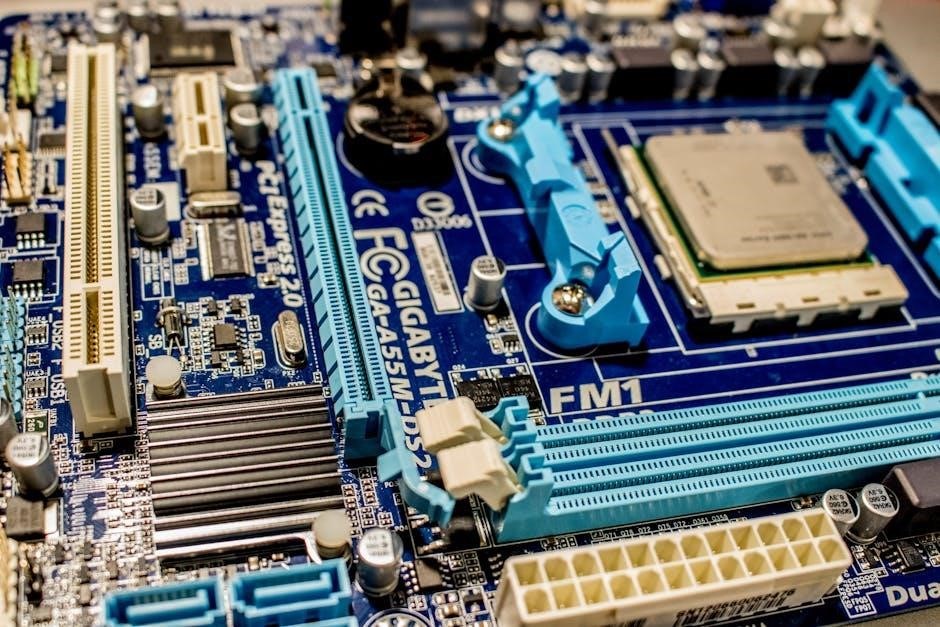
The Southbridge didn’t demand the same level of performance as the Northbridge, so cooling requirements were less stringent․ Like the Northbridge, its functions have largely been absorbed into the Platform Controller Hub (PCH) in modern systems․ This integration streamlines data flow and reduces overall system complexity․ Understanding the Southbridge’s role illuminates the historical development of laptop motherboard design․
III․C․ Platform Controller Hub (PCH) ⏤ Modern Integration
Modern laptops utilize the Platform Controller Hub (PCH), consolidating functions previously handled by both the Northbridge and Southbridge chipsets․ This integration significantly streamlines motherboard design and improves system efficiency․ The PCH manages a wide array of I/O functions, including USB, SATA, PCIe, and audio, acting as a central communication point․
By integrating these components, the PCH reduces latency and enhances data transfer speeds․ It also allows for a simpler motherboard layout, freeing up space for other components․ This consolidation is a key factor in the miniaturization and increased performance of contemporary laptops, representing a significant advancement in motherboard technology․
IV․ Central Processing Unit (CPU) Socket
The CPU socket is a critical component of the laptop motherboard, providing the mechanical and electrical connection for the central processing unit․ This interface dictates which CPUs are compatible with the motherboard, influencing overall system performance․ Sockets vary in design, accommodating different CPU generations and manufacturers․
A secure and reliable connection is paramount for stable operation, as the CPU generates significant heat․ The socket’s design must facilitate efficient heat dissipation․ Proper socket maintenance is crucial; bent pins can prevent proper CPU seating and lead to system failures․ Understanding socket specifications is vital when upgrading or repairing a laptop․
V․A․ Socket Types (LGA, BGA)
Laptop CPUs primarily utilize two socket types: Land Grid Array (LGA) and Ball Grid Array (BGA)․ LGA sockets feature pins on the motherboard that connect with pads on the CPU, offering easier upgrades and replacements․ This allows for relatively straightforward CPU swapping if a newer, compatible processor is desired․
BGA sockets, conversely, have solder balls on the CPU that connect directly to pads on the motherboard․ This results in a more compact design but makes CPU replacement significantly more difficult, often requiring specialized equipment and expertise․ BGA CPUs are typically soldered directly onto the board, making upgrades impractical for most users․ The choice impacts repairability and upgrade potential․
V․B․ CPU Compatibility & Generation
Ensuring CPU compatibility is crucial; motherboards are designed to support specific CPU generations and series from Intel or AMD․ The chipset dictates this compatibility, meaning a motherboard designed for 12th-generation Intel processors won’t necessarily work with 13th or 14th generation CPUs․
Beyond generation, the specific CPU model must also be compatible․ Motherboard manufacturers provide CPU support lists detailing which processors are tested and confirmed to function correctly․ Using an unsupported CPU can lead to system instability or failure․ Furthermore, power requirements and thermal design power (TDP) must align to prevent overheating and ensure optimal performance․ Careful research is essential before upgrading․
VI․ RAM Slots & Memory Controller
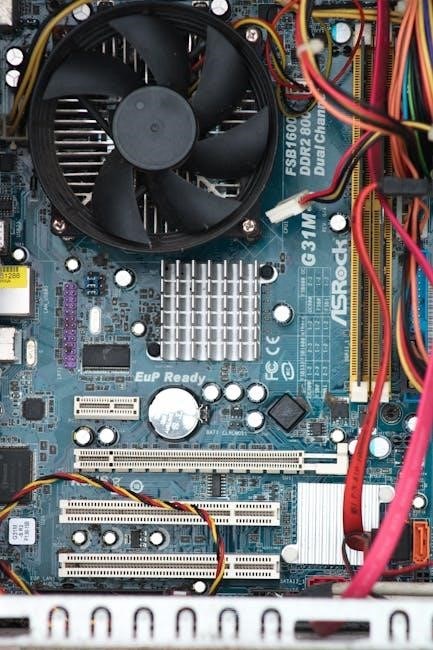
Laptop motherboards feature RAM slots that accommodate memory modules, typically DDR4 or DDR5․ The memory controller, integrated into the CPU or chipset, manages communication between the RAM and the processor․ The number of slots varies – some laptops have two, while others have only one, limiting upgrade potential․
Maximum supported RAM capacity is another critical factor, dictated by the motherboard’s design and the memory controller’s capabilities․ Understanding these specifications is vital when planning a memory upgrade․ The motherboard also determines the maximum RAM speed supported, impacting overall system performance․
VII․A․ DDR4 vs․ DDR5 Support
DDR4 and DDR5 represent distinct generations of dynamic random-access memory, differing in speed, bandwidth, and power efficiency․ DDR5 offers significantly higher bandwidth and speeds compared to DDR4, leading to improved system responsiveness, particularly in demanding applications․ However, DDR5 modules and compatible motherboards are generally more expensive․
Motherboard compatibility is crucial; a motherboard designed for DDR4 will not support DDR5, and vice versa․ DDR5 also requires a new voltage regulation design․ When upgrading, verify the motherboard’s specifications to ensure compatibility with the chosen RAM type․ The choice depends on budget, performance needs, and motherboard limitations․
VII․B․ Dual-Channel & Quad-Channel Configurations
RAM configurations significantly impact performance․ Dual-channel utilizes two RAM modules simultaneously, effectively doubling the memory bandwidth compared to single-channel operation․ Quad-channel, found in higher-end laptops, employs four modules, further increasing bandwidth․ To enable these modes, modules must be identical in size, speed, and timings․
Motherboards support specific configurations; check the manual to determine the optimal RAM slot population for dual or quad-channel operation․ Incorrect installation can result in reduced performance․ Utilizing the correct configuration maximizes data transfer rates, improving overall system responsiveness, especially during multitasking and resource-intensive tasks like gaming or video editing․
VIII․ Expansion Slots
Expansion slots allow for adding functionality to a laptop beyond its base configuration․ While desktops offer numerous PCIe slots, laptops typically have limited options due to space constraints․ These slots facilitate upgrades like dedicated graphics cards (though rare in laptops), faster storage, or additional networking capabilities․
Modern laptops primarily utilize M․2 slots, supporting both NVMe and SATA SSDs․ Older models might include Mini PCIe slots, primarily for Wi-Fi cards․ The availability and type of expansion slots vary significantly between laptop models, influencing upgradeability․ Understanding these slots is crucial when considering future enhancements to your laptop’s performance or features․
IX․A․ M․2 Slots (NVMe & SATA)
M․2 slots have become the standard for internal storage expansion in modern laptops, offering a compact and high-speed interface; These slots support two primary protocols: NVMe (Non-Volatile Memory Express) and SATA (Serial ATA)․ NVMe drives, utilizing the PCIe interface, deliver significantly faster read and write speeds compared to traditional SATA SSDs;
Laptop motherboards often feature M․2 slots capable of supporting both NVMe and SATA drives, though some may be limited to one protocol․ Identifying the slot’s compatibility is crucial before purchasing an M․2 SSD․ The physical size of M․2 drives also varies (2280 being common), so ensuring compatibility with the laptop’s slot is essential for a successful upgrade․
IX․B․ Mini PCIe Slots (Older Laptops)
Mini PCIe slots represent an earlier standard for expansion cards within laptops, predating the widespread adoption of M․2․ Historically, these slots were commonly used for wireless network cards (Wi-Fi) and, occasionally, mSATA solid-state drives․ While smaller than standard PCIe slots, Mini PCIe provided a pathway for adding functionality or upgrading storage․
However, Mini PCIe is now largely obsolete in newer laptop designs․ M․2 has superseded it due to its superior speed and versatility․ Finding laptops with functional Mini PCIe slots for storage upgrades is becoming increasingly rare․ If present, these slots typically offer slower data transfer rates compared to modern NVMe or even SATA-based M․2 SSDs․
X․ Storage Connectors
Laptop motherboards feature various connectors dedicated to storage devices, enabling the installation of hard disk drives (HDDs) and solid-state drives (SSDs)․ These connectors dictate the type of storage supported and the data transfer speeds achievable․ The most prevalent modern connectors are SATA and M․2, though older laptops may include IDE connectors․
SATA ports traditionally served as the primary interface for connecting 2․5-inch HDDs and SSDs․ M․2 slots, however, have gained prominence, supporting both SATA-based and the significantly faster NVMe SSDs․ The motherboard’s chipset determines the number of available storage connectors and their capabilities, influencing overall system performance and storage capacity․
XI․A․ SATA Ports
Serial ATA (SATA) ports are a cornerstone of laptop storage connectivity, traditionally used for 2․5-inch hard disk drives (HDDs) and solid-state drives (SSDs)․ These ports facilitate data transfer between the storage device and the motherboard via a serial connection․ SATA revisions, such as SATA III, offer increased bandwidth, currently peaking at 6 Gbps, impacting read and write speeds․
Most laptop motherboards include one to two SATA ports, though some higher-end models may offer more․ They utilize a 7-pin data connector and a separate 15-pin power connector․ While increasingly superseded by M․2 NVMe SSDs for primary storage, SATA remains relevant for secondary storage or compatibility with older devices, providing a cost-effective storage solution․
XI․B․ eSATA Ports (Less Common)
External SATA (eSATA) ports were designed to provide the speed of internal SATA connections to external storage devices․ Unlike USB, eSATA delivers performance comparable to internally connected drives, making it suitable for demanding applications like video editing or large file transfers․ However, eSATA ports have become increasingly rare on modern laptops․
Their decline is attributed to the rise of faster and more versatile interfaces like USB 3․0, USB 3․1, and Thunderbolt․ These alternatives offer comparable speeds with the added convenience of broader device compatibility․ eSATA ports typically use a standard SATA connector, requiring a specific eSATA cable․ While offering a performance advantage over older USB standards, their limited adoption has led to their phasing out in contemporary laptop designs․
XII․ Integrated Graphics Processing Unit (GPU)
Many laptops utilize an integrated GPU (iGPU), which is built directly into the CPU or the motherboard chipset․ This contrasts with discrete GPUs, which are separate expansion cards․ iGPUs share system memory (RAM) and are generally less powerful than dedicated graphics cards, but they consume less power and reduce overall system cost․
Integrated graphics are sufficient for everyday tasks like web browsing, office applications, and video playback․ Modern iGPUs have significantly improved, capable of handling some light gaming and basic photo/video editing․ The performance of an iGPU depends on the specific model and the amount of system memory allocated to it․ They are a crucial component for laptops prioritizing portability and battery life over high-end graphics performance․
XIII․A․ Integrated vs․ Discrete Graphics
The core difference lies in processing power and dedicated memory․ Integrated graphics, part of the CPU or chipset, share system RAM, making them energy-efficient and cost-effective for basic tasks․ Discrete graphics, however, are separate cards with their own dedicated Video RAM (VRAM), offering significantly higher performance․
Laptops with discrete GPUs excel in demanding applications like gaming, video editing, and 3D rendering․ They provide smoother frame rates and higher resolutions․ Integrated graphics are suitable for everyday use – browsing, office work, and streaming․ The choice depends on the user’s needs; portability and battery life often favor integrated solutions, while performance demands necessitate a discrete GPU․
XIII․B․ Graphics Memory Allocation
Graphics memory, or VRAM, is crucial for rendering images and videos․ Integrated graphics utilize a portion of the system’s RAM, dynamically allocated as needed․ This “shared memory” approach can impact overall system performance when the GPU demands a large allocation․
Discrete GPUs possess dedicated VRAM, typically GDDR6 or GDDR6X, offering faster speeds and higher bandwidth․ The amount of VRAM significantly affects the ability to handle high-resolution textures and complex scenes․ Insufficient VRAM leads to stuttering and reduced visual quality․ Laptop manufacturers specify VRAM capacity, influencing gaming and content creation capabilities․ Proper allocation ensures optimal graphical performance․
XIV․ Audio Codec & Connectors
The audio codec on a laptop motherboard is responsible for converting digital audio signals to analog and vice versa․ Modern laptops typically employ high-definition audio codecs, delivering improved sound quality and supporting multi-channel audio output․ These codecs manage input from microphones and output to speakers or headphones․
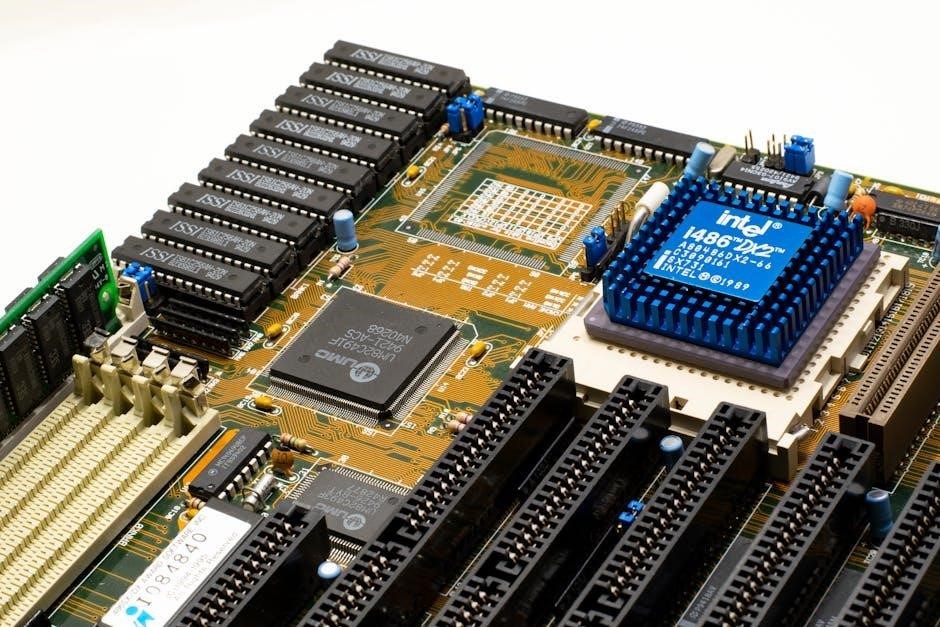
Connectors include standard 3․5mm audio jacks for headphones and microphones, often combined into a single TRRS connector․ Some motherboards feature optical S/PDIF outputs for digital audio transmission․ Onboard audio chipsets, like those from Realtek or Cirrus Logic, determine the overall audio fidelity․ Quality components enhance the listening experience․
XV․A․ Onboard Audio Chipsets
Onboard audio chipsets are integral to a laptop’s sound capabilities, handling all audio processing tasks․ Leading manufacturers include Realtek, Cirrus Logic, and occasionally VIA․ Realtek’s ALC series (e․g․, ALC887, ALC1220) are commonly found, offering varying levels of quality and feature support, from basic stereo to immersive surround sound․
Cirrus Logic chipsets often prioritize higher fidelity audio, appealing to audiophiles․ The chipset dictates supported sample rates, bit depths, and audio formats․ Modern chipsets support technologies like Nahimic or Sonic Studio for enhanced spatial audio and noise cancellation; The chipset’s quality directly impacts the overall audio experience․
XV․B․ Audio Jack & Speaker Outputs
Laptop motherboards feature dedicated connectors for audio output, primarily the 3․5mm audio jack․ This jack typically supports a combined headphone and microphone input, utilizing TRRS (Tip-Ring-Ring-Sleeve) connections․ Separate jacks for dedicated microphone and headphone inputs are found on some models, offering improved signal clarity․
Internal speaker outputs are provided via dedicated headers, connecting to the laptop’s built-in speakers․ The quality of these outputs, alongside the audio chipset, determines the loudness and clarity of the sound․ Some high-end laptops include optical S/PDIF outputs for digital audio transmission․ Proper grounding and shielding are crucial to minimize noise and interference․
XVI․ Networking Components
Laptop motherboards integrate essential networking components for connectivity․ The Ethernet controller and associated RJ45 port enable wired network access, supporting various speeds like Gigabit Ethernet․ Increasingly, laptops rely on wireless connectivity provided by a Wi-Fi module, adhering to standards like 802․11ax (Wi-Fi 6) or newer․
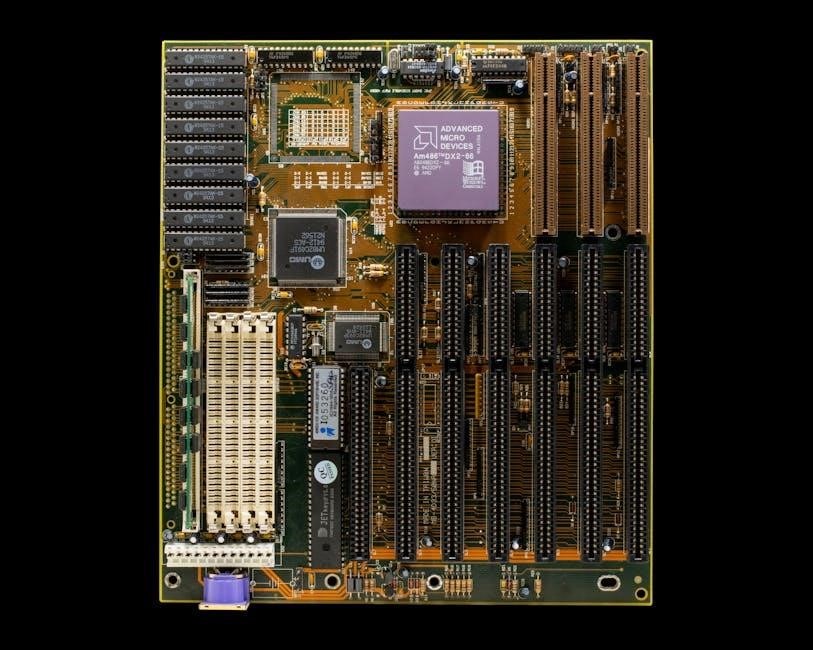
Antenna connectors on the motherboard link to internal antennas for Wi-Fi signal transmission and reception․ Modern motherboards often include Bluetooth functionality integrated within the Wi-Fi module․ Proper placement and shielding of these components are vital for optimal signal strength and minimal interference, ensuring reliable network performance․
XVII․A․ Ethernet Controller & Port
The Ethernet controller is a crucial component enabling wired network connectivity on a laptop motherboard․ This integrated circuit manages data transmission and reception over an Ethernet cable, adhering to standards like Gigabit Ethernet for speeds up to 1 Gbps․ The RJ45 port, physically present on the laptop’s chassis, serves as the interface for connecting the Ethernet cable to the motherboard․
The controller handles packet processing, media access control (MAC) addressing, and communication with the CPU via the chipset․ Quality controllers ensure stable connections and efficient data transfer․ While increasingly less common due to Wi-Fi’s prevalence, a functional Ethernet controller remains vital for reliable network access in specific scenarios․
XVII․B․ Wi-Fi Module & Antenna Connectors
The Wi-Fi module facilitates wireless network connectivity on a laptop, employing standards like 802․11ax (Wi-Fi 6) or newer for high-speed data transfer․ This module, often a PCIe-based card or M․2 form factor, integrates a radio transceiver and baseband processor․ Antenna connectors, typically u․FL or IPEX, are essential for linking the Wi-Fi module to external antennas․
These antennas, often embedded within the laptop’s display assembly, radiate and receive radio waves, enabling communication with wireless routers․ Proper antenna placement and design are critical for optimal signal strength and range․ The motherboard provides power and data pathways for the Wi-Fi module, ensuring seamless wireless operation․
XVIII․ BIOS/UEFI Chip
The BIOS (Basic Input/Output System) or UEFI (Unified Extensible Firmware Interface) chip is a fundamental component, storing the firmware that initializes the laptop during startup․ This non-volatile memory chip contains instructions for power-on self-tests (POST), hardware detection, and loading the operating system․ UEFI is the modern successor to BIOS, offering enhanced features like secure boot and improved hardware support․
The chip’s firmware controls essential system functions, enabling communication between the operating system and hardware․ Updates to the BIOS/UEFI can improve compatibility, fix bugs, and enhance performance․ Flashing the firmware requires caution, as a failed update can render the motherboard unusable․ It’s a critical element for overall system functionality․
XIX․A․ BIOS/UEFI Functionality
BIOS/UEFI’s core functionality centers around system initialization and hardware control․ Upon powering on, the firmware performs a Power-On Self-Test (POST) to verify hardware components․ It then locates and loads the operating system from a storage device․ Crucially, it provides a low-level interface for the OS to interact with hardware, managing essential functions like boot order, clock speeds, and voltage settings․
Modern UEFI implementations offer advanced features like secure boot, preventing malicious software from loading during startup․ The setup utility, accessible during boot, allows users to configure hardware settings and customize system behavior․ This foundational software layer is vital for a laptop’s operational integrity․
XIX․B․ BIOS/UEFI Updates & Flashing
Regular BIOS/UEFI updates are crucial for maintaining laptop performance and security․ Manufacturers release updates to address bugs, improve hardware compatibility, and enhance system stability․ Flashing, the process of updating the firmware, requires caution as interruption can render the motherboard unusable․
Typically, updates are applied through a dedicated utility within the operating system or via a bootable USB drive․ It’s essential to follow the manufacturer’s instructions precisely and ensure a stable power supply during the process․ Successful flashing can unlock new features, improve system responsiveness, and patch security vulnerabilities, extending the laptop’s lifespan․
XX․ Power Delivery System
The power delivery system is fundamental to a laptop’s operation, efficiently distributing electricity from the external power source to all components․ It begins with the DC-In jack, receiving power from the adapter, and then utilizes sophisticated circuitry to regulate voltage levels․ Voltage Regulator Modules (VRMs) are key, converting the input voltage to the precise levels required by the CPU, GPU, and other components․
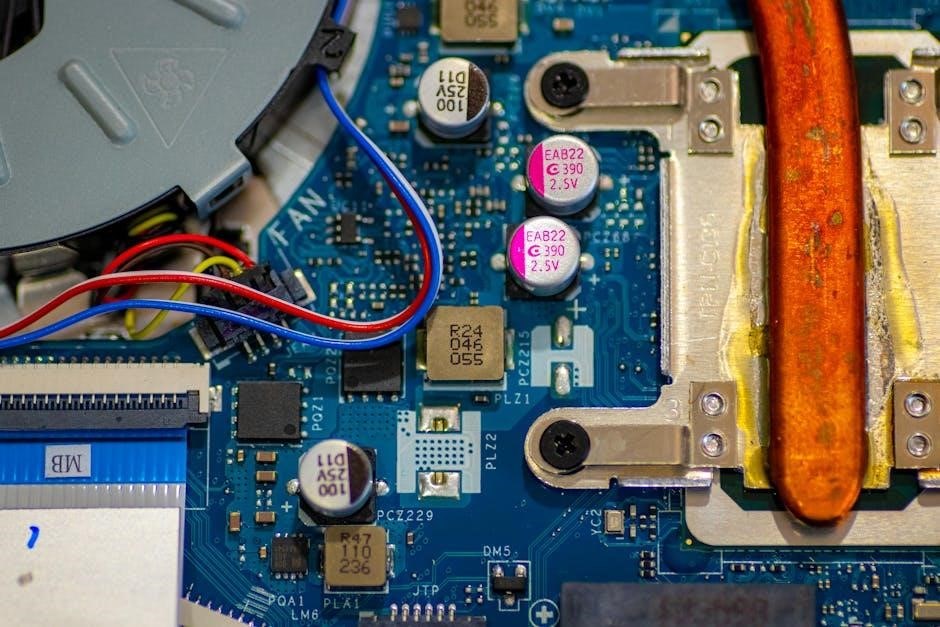
Effective VRMs are vital for stable performance, especially during demanding tasks․ Quality components and robust design minimize power loss and heat generation․ Proper power management is crucial for battery life and overall system reliability, ensuring consistent operation under varying workloads․
XXI․A․ Power Connectors (DC-In Jack)
The DC-In jack serves as the primary entry point for power into the laptop, connecting to the external power adapter․ Its design varies significantly between laptop models, differing in barrel size, pin configuration, and even USB-C based power delivery․ A secure and reliable connection is paramount to prevent interruptions in power supply, which could lead to data loss or system instability․
Modern laptops increasingly adopt USB-C Power Delivery (USB-PD), allowing charging via a universal USB-C port․ The DC-In jack’s quality impacts the efficiency of power transfer and the overall lifespan of the charging system․ Proper maintenance, including keeping the port clean and free of debris, is essential for optimal performance․
XXI․B․ Voltage Regulator Modules (VRMs)
Voltage Regulator Modules (VRMs) are critical components responsible for converting the incoming DC power into the various voltage levels required by the CPU, GPU, and other laptop components․ They ensure stable and clean power delivery, preventing damage and ensuring optimal performance․ VRMs consist of MOSFETs, chokes, and capacitors working in concert to regulate voltage․
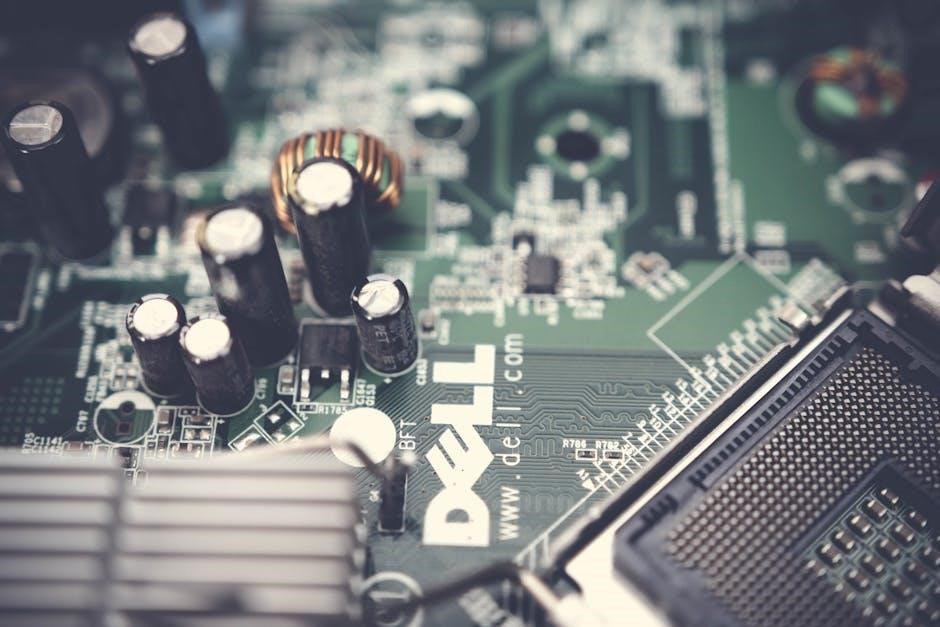
The quality and design of VRMs directly impact a laptop’s ability to handle demanding tasks like gaming or video editing․ More robust VRMs with better cooling solutions are essential for high-performance laptops․ Effective VRM design minimizes power loss and heat generation, contributing to overall system efficiency and longevity․
XXII․ Embedded Controller (EC)
The Embedded Controller (EC) is a specialized microcontroller on the laptop motherboard, managing low-power functions independent of the main CPU․ It handles tasks like keyboard and touchpad control, power management, fan speed regulation, and battery charging․ The EC operates even when the laptop is in sleep or shutdown mode, enabling features like wake-on-LAN or lid-open activation․
It interfaces with various sensors and peripherals, monitoring system status and responding to user input․ The EC’s firmware is crucial for reliable operation and often requires updates to address bugs or improve functionality․ It’s a vital, though often unseen, component ensuring seamless user experience and efficient power consumption․
XXIII․ CMOS Battery
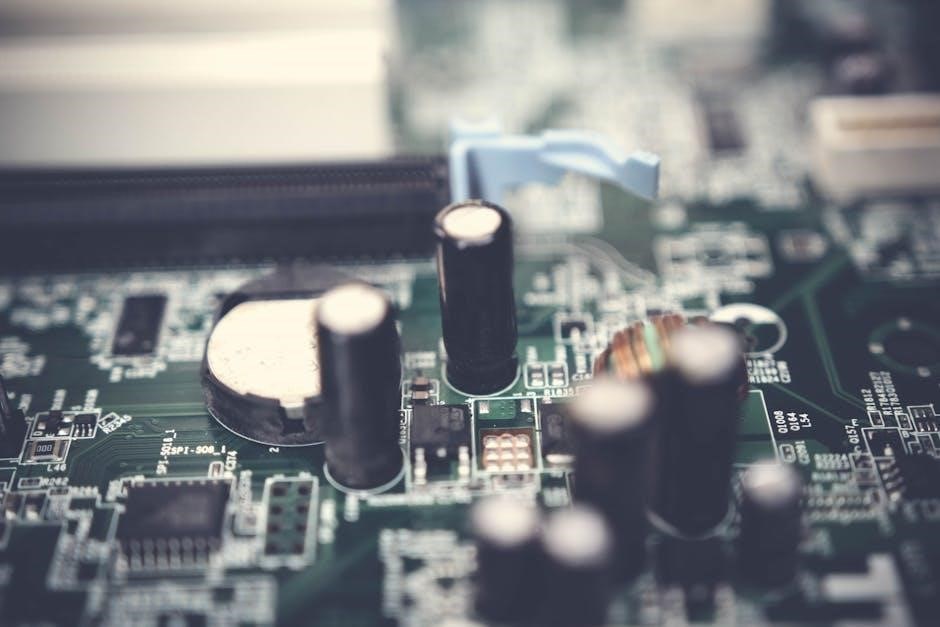
The CMOS (Complementary Metal-Oxide-Semiconductor) battery is a small, coin-cell battery on the laptop motherboard․ Its primary role is to power the CMOS chip, which stores the BIOS/UEFI settings, system time, and date․ Even when the laptop is unplugged, the CMOS battery maintains this critical information, ensuring the system boots correctly and retains personalized configurations․
A failing CMOS battery can lead to frequent BIOS reset requests, incorrect system time, and boot failures․ Replacing the CMOS battery is a relatively simple procedure, often involving opening the laptop’s base and swapping the battery․ Maintaining a functional CMOS battery is essential for stable and reliable laptop operation, preventing frustrating startup issues․
XXIV․ Front Panel Connectors & Headers
Front panel connectors and headers are crucial interfaces on the laptop motherboard, facilitating communication between the motherboard and the laptop’s external controls․ These connectors link components like the power button, reset button, power LED, and hard drive activity LED to the motherboard’s control circuitry․ They are typically small, multi-pin headers requiring precise connection to ensure proper functionality․
Incorrectly connected front panel connectors can prevent the laptop from powering on, displaying incorrect LED status, or functioning erratically․ Laptop service manuals detail the specific pin assignments for each connector․ Understanding these connections is vital during repairs or custom builds, guaranteeing seamless interaction between the laptop’s case and its internal systems․